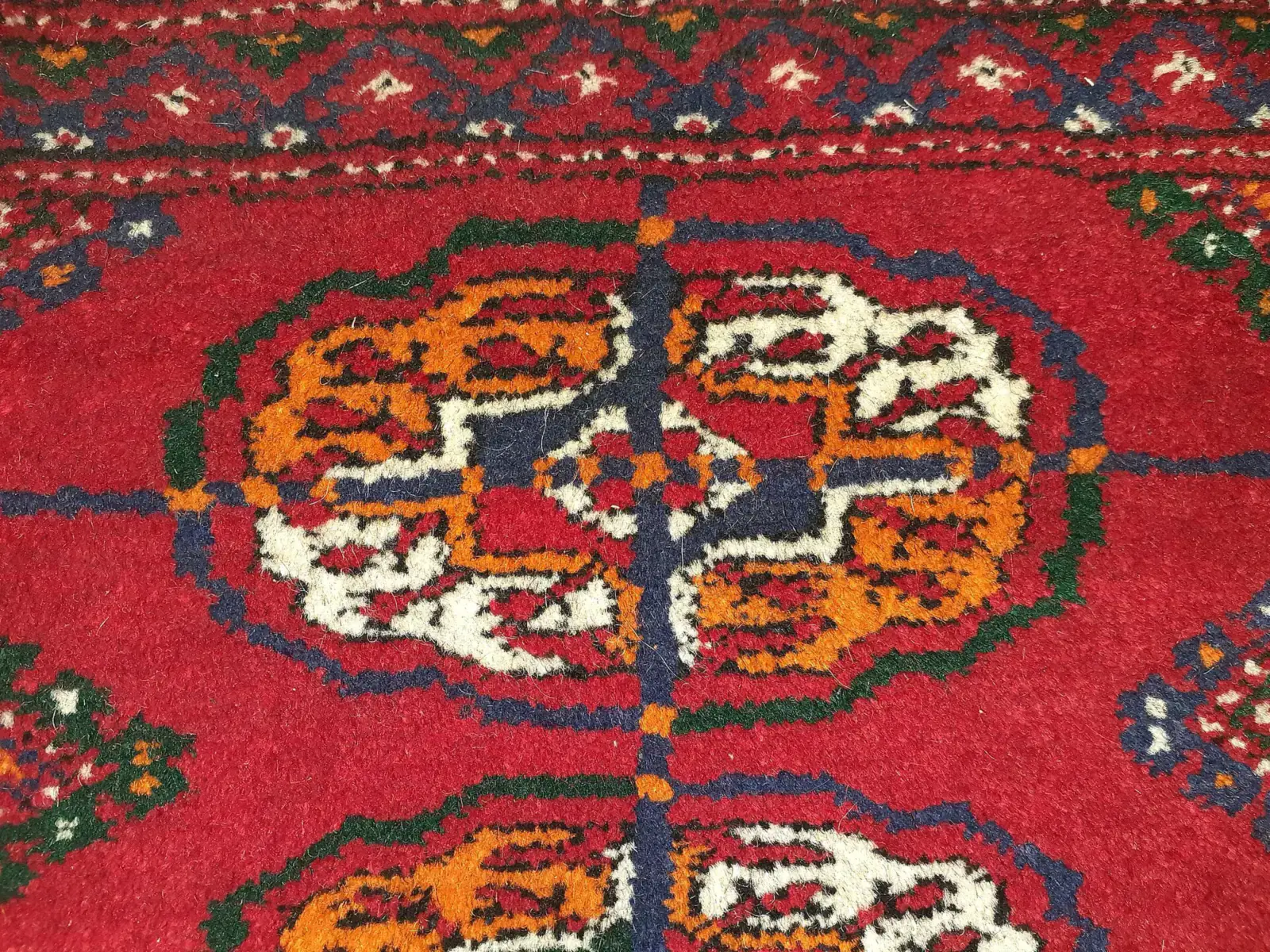
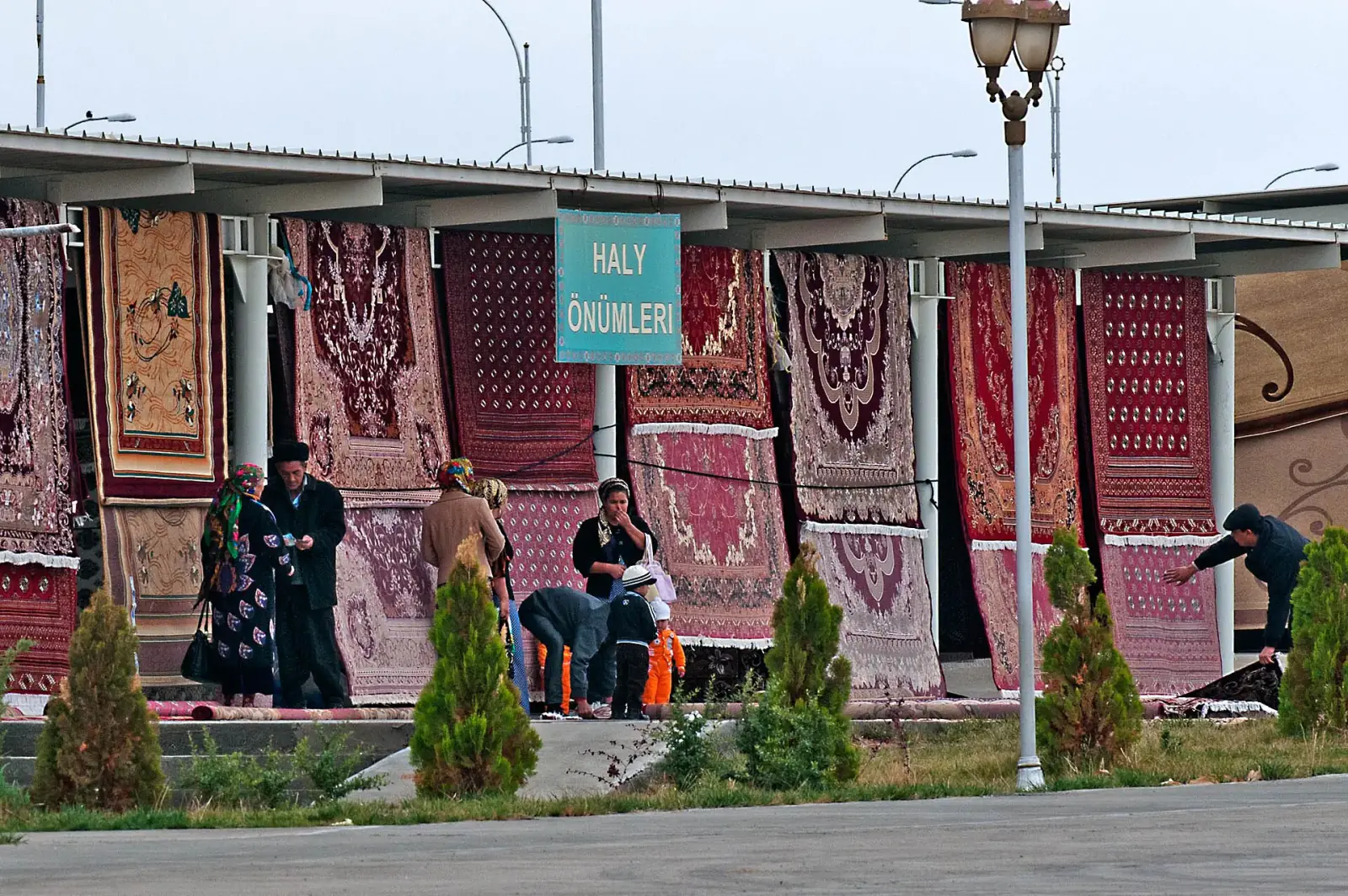
A Turkmen carpet is not just a floor covering. For nomadic families it was a dowry, a wall against the wind, a prayer mat and a record of the family line. The deep red background and the repeating octagonal medallions — gul — make a Turkmen carpet recognisable anywhere in the world.
Patterns of the tribes
Every large tribe — Teke, Ýomut, Saryk, Salyr, Ersary — had its own gul, passed from mother to daughter. The five main guls are placed on the vertical stripe of the national flag, a reminder that the carpet is a symbol of unity of the Turkmen people.
How a carpet is made
Wool from local sheep is spun, dyed with madder, walnut and pomegranate and knotted on a horizontal loom. A good weaver ties up to 8,000 knots a day; a large carpet can take a year of work. Fine Turkmen carpets have more than 300,000 knots per square metre.
Where to see them
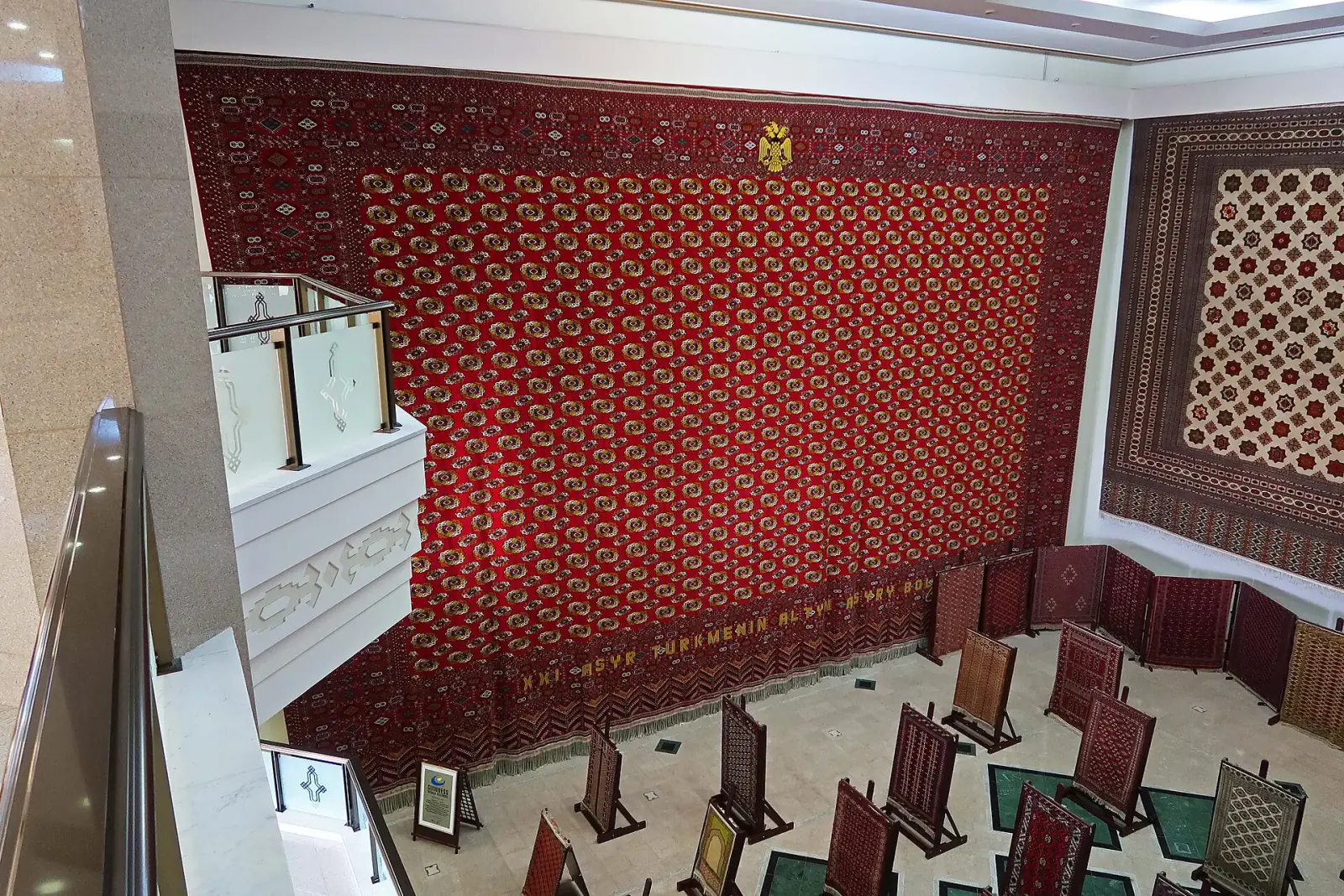
- The Carpet Museum in Ashgabat keeps more than a thousand carpets, including one of the largest hand-woven carpets in the world (about 300 m²).
- Carpet workshops where you can watch the weavers at work.
- The Altyn Asyr (Tolkuchka) bazaar, where carpets are sold on weekends.
- Carpet Day is celebrated on the last Sunday of May.
Good to know: carpets bought in Turkmenistan need an export certificate. We help our guests to arrange it.